
IITHE Diploma in Certified Phlebotomy Technician
Overview
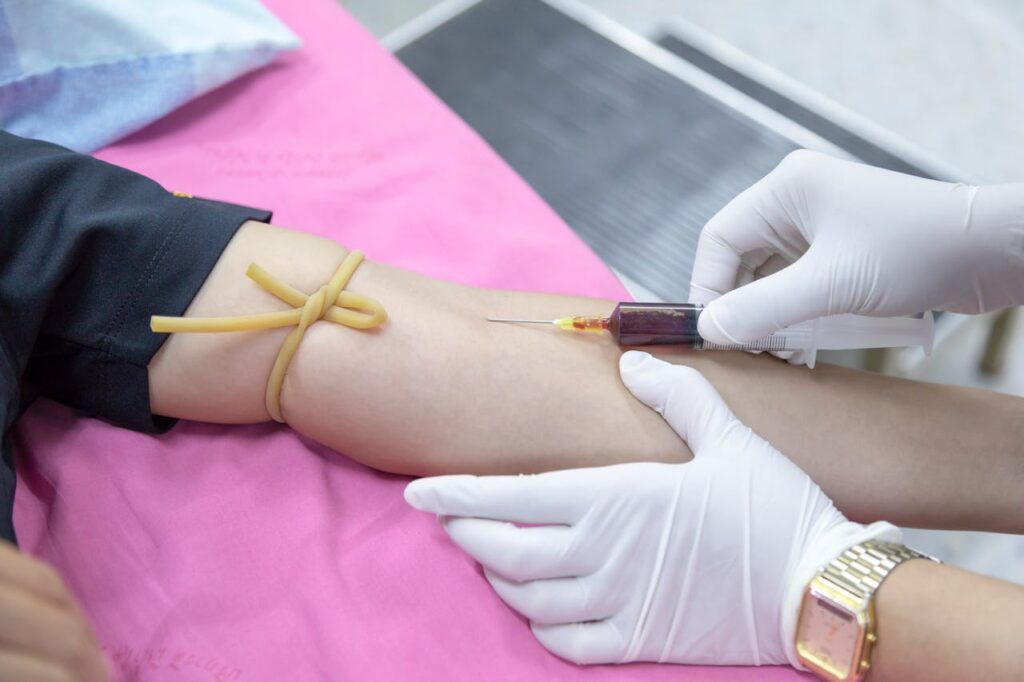
The IITHE Diploma in Certified Phlebotomy Technician is designed to provide learners with comprehensive knowledge and practical skills required to perform venipuncture, capillary puncture, and manage blood samples for testing, transfusions, donations, or research. Phlebotomists play a crucial role in the healthcare system by ensuring accurate and safe collection of blood specimens. This program equips students with the technical expertise, patient care knowledge, and adherence to healthcare safety standards to pursue a career in phlebotomy.
Entry Requirements:
- Age Requirement: Learners must be at least 18 years old.
- Education: Completion of high school or an equivalent Level 3 qualification is recommended.
- English Proficiency: Learners from non-English speaking countries must provide evidence of English language competency.
- Health Requirements: Learners must be in good health to perform the duties of a phlebotomist, including standing for extended periods and handling blood samples.
Qualification Structure:
The IITHE Diploma in Certified Phlebotomy Technician consists of 12 mandatory units, providing a total of 120 credits. This qualification is designed to offer both theoretical and practical knowledge in phlebotomy techniques, patient interaction, and safety protocols.
Mandatory Units:
- Introduction to Phlebotomy (10 credits)
- Overview of the role of a phlebotomist and introduction to healthcare systems.
- Anatomy and Physiology for Phlebotomy (10 credits)
- Study of the circulatory system, veins, and tissue structures relevant to blood collection.
- Venipuncture Techniques (10 credits)
- Comprehensive training in venipuncture procedures and best practices.
- Capillary Puncture Techniques (10 credits)
- Understanding capillary puncture, its uses, and mastering the technique.
- Infection Control and Health Safety (10 credits)
- Ensuring the highest level of safety and hygiene in the handling of blood and medical equipment.
- Specimen Handling and Lab Procedures (10 credits)
- Learning about specimen handling, labeling, transportation, and analysis.
- Patient Interaction and Care (10 credits)
- Techniques for ensuring patient comfort and managing anxiety during procedures.
- Legal and Ethical Issues in Phlebotomy (10 credits)
- Overview of the ethical considerations and legal responsibilities in phlebotomy.
- Complications and Difficult Cases (10 credits)
- Identifying and managing complications such as difficult veins or patient reactions.
- Emergency Procedures in Phlebotomy (10 credits)
- Learning the proper response to medical emergencies during blood collection.
- Phlebotomy in Special Populations (10 credits)
- Techniques for dealing with pediatric, geriatric, and other special patient populations.
- Professional Development and Career Preparation (10 credits)
- Guidance on continuing education and career progression within healthcare.
Duration and Delivery:
The course is designed to be completed over a period of 6-12 months, depending on whether learners choose full-time or part-time study. The program offers flexible delivery options:
- Face-to-face instruction with practical sessions in approved phlebotomy labs.
- Distance learning options for theoretical components via online platforms.
- Practical internships at local clinics, hospitals, or healthcare centers to provide hands-on experience.
Assessment and Verification:
- Internal Assessment: All units are assessed through a combination of written assignments, practical demonstrations, and case studies.
- Practical Examinations: Learners will be required to demonstrate their skills in venipuncture, specimen handling, and infection control.
- External Verification: The assessments will be externally verified by IITHE to ensure standards of quality and consistency.
- To pass, students must successfully meet all the learning outcomes and demonstrate proficiency in the mandatory practical skills.
Progression Opportunities:
Upon successful completion of the Diploma in Certified Phlebotomy Technician, graduates will have the qualifications and skills to pursue a career in healthcare or advance their studies in related fields. Progression opportunities include:
- Phlebotomy Technician roles in hospitals, diagnostic laboratories, and blood donation centers.
- Further studies in Healthcare Management, Nursing, or other specialized healthcare professions.
- Opportunities to become Lab Technicians, advancing to more senior roles within clinical labs or diagnostic facilities.
- Pathway to higher education degrees, including Diploma in Medical Laboratory Technology or Nursing Assistant Programs.
This course is ideal for anyone looking to enter the healthcare field with a focus on phlebotomy and blood collection techniques, providing them with the skills to succeed in a growing medical sector.